
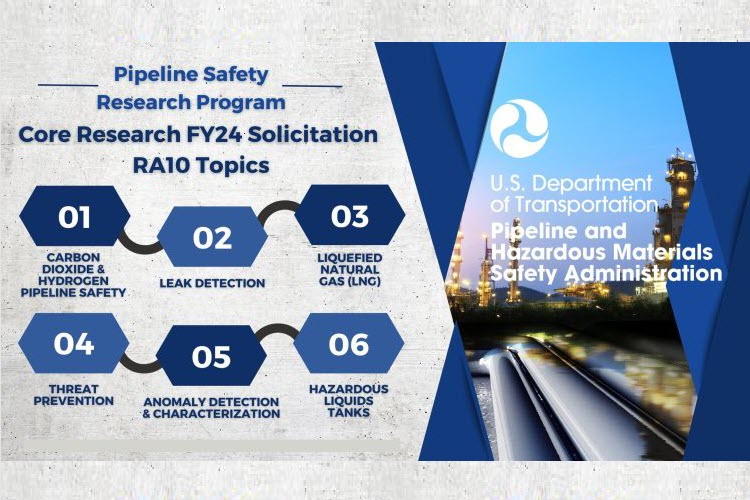
Flowstate is proud to share the completed results of our PHMSA-funded research project: Advanced Leak Detection Capabilities for Compressible Hydrocarbon Products.
Compressible fluids (natural gas, ethylene, CO₂, NGLs, and similar products) create a unique challenge. Normal operations — flow ramps, pressure changes, booster activity, and line-pack cycles — can look a lot like leaks. Traditional systems often respond by raising false alarms or being desensitized during the periods when reliable detection matters most.
Our approach pairs a machine learning model of each pipeline’s normal mass balance (with quantified uncertainty) with a statistical test that only alarms when a loss is both confident and persistent. It works with existing SCADA data — no new sensors or detailed hydraulic calibration required.
Key results:
- 0 false alarms in held-out normal operation on both test assets, including ramps, line-pack cycles, and booster changes
- 46 of 50 controlled leaks detected at SwRI’s high-pressure natural gas loop (100% of tests at 0.25 MMSCFD or larger)
- All three leak tests detected on an operating liquid ethylene pipeline, including a small test the operator’s existing system missed (~64 minutes)
The capabilities developed under this program are already implemented in Flowstate’s commercial leak detection software and deployed on operating systems.
Thank you to PHMSA’s Pipeline Safety Research & Development Program, Southwest Research Institute, our operating pipeline partner, and the Technical Advisory Panel.
Project Materials
Project details can be found on the PHMSA RD Progam site, including
See the Final Report (PDF)
Public Debrief (PPT)
Research Brief (PDF)